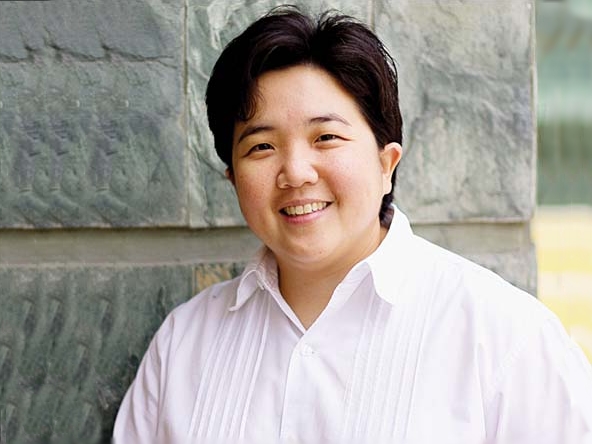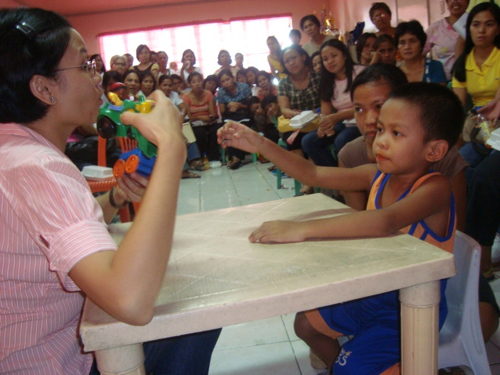
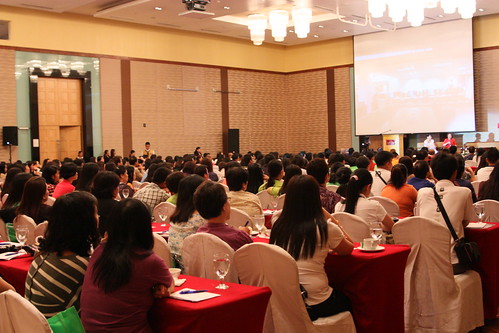
The Autism Society Philippines (ASP) is a national, non-profit organization dedicated to the well-being of persons on the autism spectrum disorder. We envision a society where Filipinos on the spectrum become the best of their potentials -- self-reliant, independent, productive, socially-accepted citizens of an Autism-OK Philippines.
Showing posts with label technology. Show all posts

22 November 2014

The rise of autism tech

The Autism Society Philippines was privileged to be among the forward-thinking organizations who participated in “The Era of Brain Technologies” delivered by Dr. Ned Sahin at the Mind Museum Taguig last 14 November 2014 -- part of a series of Executive Talks organized by First Pacific Leadership Academy. I was a parent-slash-advocate-slash-technologist among industry leaders, software developers, autism advocates and educators from ASP institutional members (such as Bridges Foundation, CARD, ILLC, Shine and TLC).

Dr. Ned Sahin and Ms. Mona Veluz

Dr. Ned Sahin is a neuroscientist and neurotechnology entrepreneur. He hold degrees in neuroscience from Williams College (BA), MIT (Master’s), and Harvard (PhD) and did a year of study at Oxford and post-doctoral fellowships at UCSD Medical School and the Salk Institute in San Diego.

Dr. Sahin’s talk first dealt with what current brain research today is making possible; and the great strides happening in wearable technology and implants, to monitor cognitive functions of individuals in high stress situations, such as soldiers; and to assist patients with disabilities correlated to reduced brain functions.

Dr. Sahim prefaced his talk on the work of Brain Power LLC with what many do not know about autism -- “There is no medical procedure that can test autism. There are no remarkable physiological differences in an autistic brain. Autism can be detected only through behavior.” I found endearing his compassionate understanding of autism and the effect the condition has on the person with autism and the family.

Dr. Sahin’s work on wearable technology for individuals with autism was the highlight of the afternoon. Using Google Glass (a computing eyewear with an optical head-mounted display and Google’s first attempt at mass-market ubiquitous technology), Dr. Sahin has developed software and hardware to help address the main deficits of autism and the needs of the family members and caregivers. His technology assists the individual with autism by developing attention span, tolerance to visual stimuli, metalinguistic skills, and capabilities for emotional decoding. The solution is able to address autism’s social and language deficits through its ability to quantify behavior (for example, percentage a PWA looks when his name is called) and count movement (such as blinking of the eyes or bowing of the head); through gamification that rewards desired behavior; through algorithms that analyze facial patterns; among many others.

Dr. Sahin showed videos of children and young adults with autism trying on the headgear for the first time and adapting with success; as well as images of Dr. Temple Grandin geeking out over this new technology.

So what lies in the future of autism tech? Dr. Sahin emphasized the role technology and the “internet of things” will play in the coming years, especially in terms of augmenting normal human cognitive abilities. He shared his excitement over the possibility of contextual, predictive and prescriptive analytics. Insight from large data sets captured by the Google glass can revolutionize how individuals with autism interact with the world and how the world understands autism.

We look forward to the day the technology becomes commercial and makes it to the Philippine shores!

*****

In celebration of the National Autism Consciousness Week in January 2015, the Autism Society Philippines is organizing a seminar on “Adaptive and Assistive Technologies for Persons with Autism.” Please watch for further announcements on our FB page and http://www.autismsocietyphilippines.org.

About the contributor: Mona Magno-Veluz serves as the National President of the Autism Society Philippines and is a self-confessed technology "geek." She received degrees in Business Administration, Applied Economics and Strategic Marketing from the University of the Philippines Diliman, University of Asia and the Pacific and the London School of Business. Drawing from her experience as a corporate communications professional in multinational technology companies, she helped grow the national advocacy initiatives such as the 1Pangako campaign and the ASP Angel Corps. Her eldest is PWA Carl, a young man working in their family business and growing his budding entrepreneurial venture. This article first appeared in Mighty Magulang.

03 November 2014

Autism Society Philippines and SAP partner to improve autism care

In a first for the Asia Pacific region, Care Circles will make it easier for Filipino families who live with autism to connect with the global and local advocacy and healthcare communities. Download press release here.

The Autism Society Philippines (ASP) and SAP today announced a pilot project in the Philippines which aims to improve the quality of care provided to those with autism. At the center of the pilot is Care Circles, an SAP service for tablets and smartphones similar to a private social network.

This project marks the first national pilot of Care Circles, the first in the Asia Pacific region, and the first outside the United States. Care Circles helps patients and their families connect with advocacy and healthcare programs and providers, which provide best practices in self-care and caregiving. This service helps create healthier lives by enabling communities and empowering families to care for each other.

Edler Panlilio, SAP Senior Director, Enterprise with ASP's (L-R) Auditor Peng So,
President Mona Magno-Veluz and Trustee Grace Adviento at the MOU signing

“Tens of millions of people in Asia live with autism, and they are typically supported by a circle of caregivers. Care Circles can help these caregivers improve the lives of those living with autism through best practices and collaboration,” said Andy David, Director for Healthcare in the Asia Pacific at SAP. “Social networks can provide great support to people who have unique interests or feel stigmatized, and so we believe Care Circles, as a private social network for healthcare, can help improve lives. It brings the benefits of social networks to healthcare.”

Through the pilot, the Autism Society Philippines will share Philippine-specific resources, expert content and family-centric insights on autism which will be accessible to people using Care Circles. The ASP aims to complement their efforts in family- and community-based rehabilitation with technologies that their network of families, speech pathologists, occupational therapists, physical therapists and developmental pediatricians can use for the care of Filipinos with autism. The ASP is hopeful that with widespread adoption, the solution will help crowdsource answers to questions on prevalence, incidence and impact of autism on the Philippine population.

“Autism is a lifetime condition. With Care Circles, the case management of individuals with autism will now be a social experience shared with his circle of ‘guardian angels’ from childhood to their transition to adulthood,” said Erlinda Koe, Chair Emeritus of the Autism Society Philippines.

Care Circles helps people learn about a family member's condition, share knowledge, and track daily progress. Care Circles also provides a platform to publish best practices. In addition, Care Circles lets people collaborate through a private journal to take preventative action and track daily progress.

Care Circles is available for iPhone and iPad from the App Store. Philippine-specific content from the Autism Society Philippines will be available in January 2015.

SAP has made waves in the autism community in April 2014 for its "Autism at Work" program. They envisioned that by 2020, one percent of SAP's global workforce will be on the spectrum. Their paid internship and full employment programs runs in India, United Kingdom, United States, Canada, Ireland and Germany.

17 June 2013

Autism Apps

By Dang U. Koe, ASP Chair Emeritus

About ten years ago, I was seriously considering buying an alternative and augmentative communication device for my son Gio. The price was equivalent to that of a second-hand car at that time, and one had to purchase such device from the US.

Now, all it takes is one touch… on your tablet… to download, most for free or for a reasonable price, autism apps that parents and therapists consider as powerful tools to reach persons with autism. Dr. Andy Shih of Autism Speaks noted that “the range of these apps has expanded well beyond the initial focus of helping people with autism communicate and improve social skills to learning about emotions and delivering basic educational lessons in a format that’s better suited to autistic learners.”

Angels talk surveyed several Filipino therapists which among these autism apps they find most useful for most of their students/patients.

Mae Catherine S. Sadicon, veteran Speech Pathologist, SPEECH Clinic and St. Luke’s Medical Center - Neurodevelopmental Center, Quezon City:

"Proloquo2Go is a communication tool most effective for children who are nonverbal or those who have minimal utterances; it captured the essence of Alternative Augmentative Communication. It is flexible for the interventionists to create personalized files specific to the child’s needs. It also facilitates improvements in in the child’s receptive and expressive vocabularies, lengthening of utterances, etcetera.

"I use the Social Express for my students who are in the high-functioning range or those with better language processing and verbal proficiency. The videos and characters are interesting. The situations they included in the app mirror the common difficulties that these children manifest and encounter.

"I also use Choice Board Creator for those who are nonverbal or with minimal verbal output. It can be used as a “bridging” tool when transitioning the child from PECS to Proloquo2Go. The user is given leeway to create picture options for the child to use. Steps in creating folders are as easy as pie... even for non-techie like me."

Anthony S. Grecia, Occupational Therapist and Program Director of GOALS (Kalookan, Alabang and BGC):

"For pretend play: Any apps by Toca Boca (a game development studio focused on child-friendly apps), such as Toca Kitchen that allows my students to interact by choosing how to prepare food. Also My Play Home - children using this app could learn the basics of everyday routines.

"For fine motor skills: Touch and Write is a fun way of learning letters by writing with shaving cream, jello, finger paint, and more. You can individualize it with your own list of names and words.

"For structuring/scheduling: First Then Visual Schedule helps kids with autism understand what is currently going on and what will be going on in their lives, which makes them feel more comfortable. This app allows you to create your own visual electronic schedules complete with text, voice, and pic
ture.

"For communication: Proloquo2go."

Kimberly Geronimo, Speech and Language Pathologist, Primary Skills Foundation:

"The Bag Game is for all age groups and to be played with others. It encourages language processing skills including asking questions.

"Between the lines, for teens and adults, works on reading social cues, such as vocal intonation, facial expressions, body language and idioms/slangs.

"Language Empires work not only on language and communication but also on problem solving skills: how which and why questions, predictions, sequencing, etc. Ideal for 8-12 year olds."

Jenette Ethel N. Vizcocho, Speech Therapist, Therapy Works, Inc. and Skill Builders:

"Bookabi let my students create their own photo stories with a wide selection of characters, backgrounds and objects that they can place, resize and rotate with the swipe of a finger.

"AutisMate is a combination of scheduler and how-to’s for activities of daily living; it can be personalized and helps the child transitions from one developmental stage to the next.

"iCommunicate is visual scheduler with auditory recordings. It also lets you customize storyboards, communication boards, choice boards, flash cards, and speech cards. Aside from using own pictures, users can record their own audio for boards."

Cheene L. Manalo, Sped Teacher, Independent Living and Learning Center in Davao:

"ABA Receptive Identification teaches children to identify objects following Applied Behavior Analysis teaching principles.

"Making Sequences customizes picture sequences using activities from your student’s daily routines.

"Pictello allows me and my students to create multimedia social stories, complete with photos and sounds."

Also cited Proloquo2Go and First Then Visual Scheduler.

Dax Conde, Speech Therapist, ILLC, Mandaluyong City:

"Pepi Bath is a role-play game where children learn about hygiene in a fun way.

"Model Me Going Places is a great visual teaching tool for helping your child learn to navigate challenging locations in the community.

"Mickey Mouse Clubhouse Road Rally is fun while learning. Kids participate directly in the storyline by completing various activities."

All our angel talkers this week agreed that there are many other apps that can be used regardless of where the child lies in the Autism Spectrum, but they should be used in moderation. As Teacher Mae Sadicon said, “I make it a point that the child gets exposed to other activities and techniques as well. I think it is equally important, even more so, to advocate for hands-on interaction with the child. This is the best APP by far :)

ASP holds back-to-back seminars on Vision Therapy by Dr. Teresita Yambot and Music Therapy by Teacher Yankee on June 29 at the Bridges Foundation School in Quezon City. The Family Support Group meeting on June 22 will be facilitated by Dad Evert Malapad. Follow Autism Society Philippines on its blogspot, Facebook and Twitter.

This article appeared in print and online by Manila Bulletin on 17 June 2013.

 
Design by Free WordPress Themes | Bloggerized by Lasantha - Premium Blogger Themes | Sweet Tomatoes Printable Coupons