
The Autism Society Philippines (ASP) is a national, non-profit organization dedicated to the well-being of persons on the autism spectrum disorder. We envision a society where Filipinos on the spectrum become the best of their potentials -- self-reliant, independent, productive, socially-accepted citizens of an Autism-OK Philippines.

17 December 2013

Family Autism Advocacy Surges Amidst the Storm

This article appeared on 16 December 2013 in the print and on-line versions of Manila Bulletin's "Angels Talk" under the by-line of Dang U. Koe, ASP Chair Emeritus.

GMA-7’s “24 Oras” reported Gene and Rita Managbanag who were helping others in Ormoc City at the height of super-typhoon Yolanda. Rita, a Special Education head, handled the evacuation of residents in her school while Gene was busy relaying messages to the rescue team as a radio communicator during calamities.

They didn’t know that in the act of saving others, they would lose one of their own. What the news did not say was that the Managbanag couple are the founding leaders of Autism Society Philippines’ Ormoc District 1 Chapter, and that the eight-year old Lorenzo was their son who drove them to pioneer autism advocacy in Ormoc.


During the 2012 National Autism Conference on “Living with Autism,” disaster preparedness was discussed by parent panelists who shared their experiences with their children with autism during super typhoons. One of them told a heart-breaking story about a mother who made the painful choice of leaving behind an adult daughter with autism who resisted being pulled out of their home filled up with floodwaters. The mother had to save the other family members. The daughter drowned.

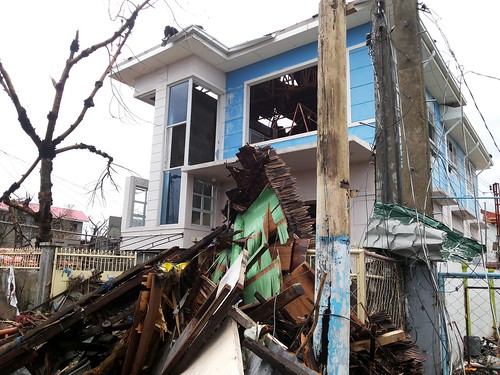
But even the tips shared by the disaster expert during the conference could not have prepared any family for Typhoon Yolanda, as experienced by Dr. Geraldine Abuyador, founding president of ASP Tacloban chapter. Her son with autism Marky, 10, was not mindful of the rains in the beginning. His family went their usual way having already secured their house from the storm. Then as water rose fast, Marky was carried piggy back by his yaya to go up their second floor. He was crying as they waded through the dirty seawater inside the house. He only stopped crying and screaming when his yaya brought him to the window and explained to him that his swing could not be seen because of water everywhere.

WHAT YOLANDA DID TO THEM

But maybe for other children with autism, having no sense of danger is a blessing. There was no trace of any fear on the face of seven-year-old Marc Laurey even when all his family members were already crying as they were being terrorized by Yolanda’s wrath. According to his mother Pia Chu, ASP Ormoc District 2 president, Marc’s first super typhoon experience made him more aware of his surroundings and taught him about stormy weather. After Yolanda, Marc also learned how to mingle with their neighbors because he enjoys going with his mother to relief distributions. The other best thing that he learned because of Yolanda is that he now knows how to lead the rosary!

Dr. Abuyador also could not stop counting her blessings after Yolanda – the people who helped them migrate to Davao, including those who gave Marky free therapy sessions as they adjust to their new home.

“Mas nagsasalita na si Marky ngayon. We hear him say words he has not said before. Who knows if the trauma of the experience allowed his brain to use nerve connections or pathways not used before?” says Dr. Abuyador who could only thank God again and again.

Picking up the pieces of their lives, these brave and resilient families still have one thing in common – the need to pursue autism advocacy after Yolanda. The loss of their dear Enzo made Gene and Rita Managbanag vow to pursue the advocacy even more relentlessly for “we cannot let the memory of Enzo just fade away.” While still busy overseeing the needs of the evacuees, the power couple behind ASP Ormoc District 1 has started planning for Angels Walk for Autism next January in their city.

For the sake of their children, Lee Mercado’s family has moved on to Manila, leaving behind their home and properties. She immediately contacted ASP national office to inquire where to place her son with autism and how to keep the child busy while looking for a school. Kind-hearted centers offered free therapy sessions for them and their other Tacloban chapter members who relocated to Manila. As chapter leader, Lee continues to monitor her flock and guide them in finding help. She appeals for temporary therapy centers so that children with autism in Tacloban will not regress.

Pia Chu’s family home, though flooded, was spared by Yolanda. She immersed in relief and rebuild operations by being a volunteer for various civic and volunteer organizations such as Rotary and UK Shelter for Humanity. Pia is now appealing for help to rebuild Linao Central School which housed the SpEd Center where her child with autism used to go.

TCADD of Tacloban

When Dr. Abuyador’s family left Tacloban to settle in Davao City, she felt hopeless to reopen the school she built as a personal mission – the Tacloban Center for Autism and Other Developmental Disabilities. But when she called up a parent to inform him that she would refund the tuition fee paid for his son with autism, the father asked her where would his son go if TCADD would close. “Then I remembered, TCADD is not my school but His school and He will provide for our needs.” Her teachers said they would stay in Tacloban and re-open the school even without salaries! They unanimously agreed to give free SpEd services in Tacloban City.

Dr Abuyador said she does not have the money to rebuild the school, but though “the flood and the wind shattered lives and homes, it gave us an opportunity to feel God’s presence through these life-changing events. Though already rejected by some possible sponsors, we hang on to our faith that in His time, TCADD will reopen to continue making positive changes in the lives of these special children of Tacloban.”
For those who would like to help in rebuilding therapy centers for children with autism and other special needs in areas affected by Yolanda, please email autismphils@gmail.com.

(Green turns silver as ASP celebrates its 25th year in 2014. Part of the celebration is the Angels Walk, also the annual kick-off event for the 18th National Autism Consciousness Week which will be held on Jan. 19, 2014 at the Mall of Asia Arena in Pasay City. Sign up on-line at http://bit.ly/angelswalk2014, for your free tickets.
06 December 2013

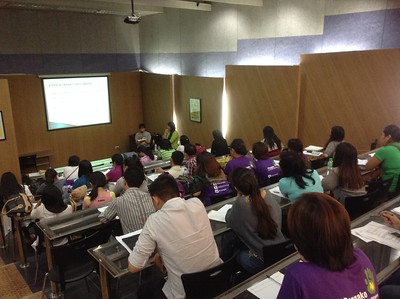
A Seminar on “Training and Job Coaching Person’s with Autism”

Teacher Landa Bautista, Executive Director of The Learning Center led “Training and Job Coaching Persons with Autism” last 30 November 2013 at Legislative Building, Quezon City Hall.

The first session entitled “Vocational Training for PWA’s” talks about understanding PWA transition and vocational training concepts, principles and best practices. The second session, “ABC’s of Job Coaching” discussed how TLC Inc. supported employment and explained the different job coaching approaches.

During Training and Job Coaching Person’s with Autism seminar

The seminar targeted the concerns of teachers, therapist and parents; and how they can guide their PWA’s in their future careera. Teacher Landa provided practical, interactive modules, like transition planning and developing on-the-job training programs near their schools.

Some participants commented:
“Most of the participants says that the seminar is very comprehensive and informative.”
“It served as an eye-opener for us further improves our vocational program in school.”
“Mostly, our practices in Early Intervention Education and other allied medical professionals whom are relevant for CWA’s. However, by learning this topic, we could apply those PWA who will find their job in the future and relevant for their life accomplishments/achievements. Good job!”

04 December 2013

Equality before the law

Article 7, one of the 30 articles included in the Universal Declaration of Human Rights adopted by the United Nations on December 10, 1948, explicitly states that “All are equal before the law and are entitled without any discrimination to equal protection under the law.” It’s been 65 years since then, and those covered by that particular article has been elaborated in several international treaties and covenants.

The year 2008, for instance, saw the Philippines join in ratifying the Convention on the Rights of Persons with Disabilities, which intends to protect the rights and dignity of persons with disabilities, as well as ensuring that they enjoy full equality under the law.

At the recently held 2013 Philippine National Autism Conference, Department of Justice (DOJ) Secretary Leila de Lima discussed how the government is striving to provide persons with disabilities (PWD) equal protection under the law. PWDs, and children with autism in particular, hold a special place in De Lima’s heart as she is mother to Israel and grandmother to Brandon, children with autism.

De Lima says that being the mother of a child with autism has not only taught her to be accepting, but vigilant when it comes to combating discrimination as well.

“I do not want people to feel that I am glossing over the difficulties and trials of being the parent and grandparent of children with autism. But my system was built on the premise that early and unequivocal acceptance equates to early joy,” she says. “Owing perhaps to my being a lawyer, I never felt threatened by institutions which may exclude or be discriminatory of my kids. I became more sensitized to the institutions barring access to true and complete fulfillment of rights of people.”

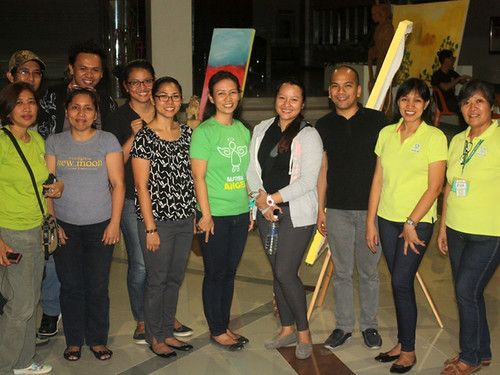
DEPARTMENT OF JUSTICE Secretary Leila de Lima (center) with Autism Society of the Philippines leaders (from left) Evelyn Go, Grace Luna Adviento, Dang Uy Koe, Mona Magno Veluz, Cecilia Santayana Sicam, and Jan Peña.

ACCESS TO JUSTICE

That vigilance was evident when she first took the helm of the Commission on Human Rights (CHR) in September 2007. She says that under her leadership, the CHR released a working paper on the rights of PWDs in accessing the justice system.

According to De Lima, the paper revealed that access to justice for people with disabilities often means overcoming obstacles of discrimination, communication, and physical access. Also worrying were the findings that showed that PWDs are at a higher risk of becoming victims of crime and exploitation and may be used by others for criminal purposes.

But the most distressing part about the 2008 study was how access to the legal system is often a difficult affair for PWDs.

“The CHR study concluded that the negative stereotyping and discrimination of PWDs by law enforcement officials and other employees of the justice system resulted in the disincentive to tap official government channels to enjoy respite from legal woes,” says De Lima. “For PWDs, communication with legal practitioners can be very difficult. Legal practitioners may not be able to understand or communicate with their clients as they may not have the adequate interpretation facilities.”

De Lima says that her current role as DOJ Secretary has helped her address the problems exposed by the 2008 CHR working paper. Under her tenure, the DOJ has created its own Action Center, situated right beside the gate of the DOJ complex in Padre Faura so as to ensure access to all people, even those with disabilities. De Lima also says that the DOJ will take an inventory of its prosecutors and frontliners to see whether they are sensitized to the needs of PWDs, particularly on the area of how to convey information and even facilitative communication.

The DOJ has also launched a PWD Legal Assistance Desk at the Quezon City Prosecutors office equipped with a manual on disability sensitivity for public attorneys and prosecutors. The Public Attorneys’ Office has also newly-designated PWD-friendly public attorneys who will handle complaints from PWDs.

FACING DISCRIMINATION

DOJ Secretary Leila de Lima outlines the avenues PWDs can pursue when faced with legal troubles or discrimination...

De Lima also stressed two new laws that PWDs can refer to when faced with discrimination in schools or in the job market. One of these laws is the act expanding the positions reserved for people with disability, which amends the Magna Carta of Disabled Persons.

“Such law seeks to address de facto discrimination against PWDs by making it mandatory for government agencies and government-owned corporations to reserve one percent of their workforce for disabled persons,” explains De Lima. “The new law also has an innovation as it encourages private companies with more than 100 employees to hire disabled persons and set aside at least one percent of their workforce for them.”

While the new law has no punitive clauses on heads of agencies or government owned and controlled corporations that do not comply with the wording and the spirit of the law, De Lima says PWDs can file an administrative case against the management invoking the Civil Service Commission’s administrative disciplinary rules.

Another law is the Anti-Bullying Act of 2013, which requires schools to adopt policies to prevent and redress all acts of bullying in their institutions.

“As parents who have put their autistic children in mainstream or even non-traditional schools will attest that their children are all prey to the antics and even cruelty of bullies,” she says. “The Anti-Bullying Law carries no criminal liability for violations. However, there are other laws that parents can resort to such as the Anti-Child Abuse Act, which has penal conditions unlike the Anti-Bullying Act.”

De Lima also trumpeted government institutions specifically targeting PWDs, such as The National Council for Disability Affairs and the Council on the Welfare of Children.

While De Lima says that the situation for PWDs in the Philippines is far from ideal, she says she hopes that the day will come when Filipino PWDs will enjoy full equality alongside their able-bodied countrymen.

“Clearly, there are so many things that need to be accomplished so that we can be close to the level of Scandinavian countries in engendering an environment where we can allow autistic loved ones to live their lives to the fullest so that they may self-actualize in the most poetic and beautiful way,” she says. “I am hopeful that in time, we will be able to put our acts together and build a more inclusive, sensitive, and embracing Philippines. I pray that we become instruments of their empowerment. Let us carry on our shoulders the plight of the PWDs.”

This article appeared on o2 December 2013 in the print and on-line versions of Manila Bulletin's "Angels Talk" under the by-line of Ronald Lim.

03 December 2013

Pushing beyond boundaries of autism through art

Autism Society Philippines’ former board trustee, Cristina Estampador, is our Angel Talker this week. Chris is a mother to two boys, Henry and Derek who are in the autism spectrum, a blogger (Eclectic Journals) and one who is into esoteric practices and quantum science. She recently facilitated Project HeART for Autism Society Philippines and Metrobank Foundation.

•••

Art has long been seen as a powerful means of self-expression. The process of art making has been recognized to ignite movements, evoke emotion and open communication in visual and theatrical forms.

Combined with the science of psychology, art plays the role not only of communicator and educator but also as a healer due to its therapeutic and experiential nature. This, therefore, brings to light its own field in psychology: art psychotherapy.

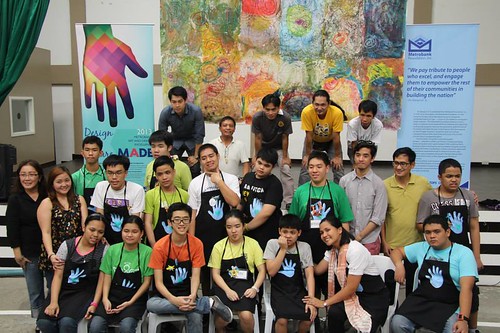
Teens with autism in Project HeART for Healing Workshop

This marriage of science and artistic practices gave birth to “Project HeART,” an art therapy program by Metrobank Foundation’s Metrobank Art & Design Excellence – Network Of Winners (MADE-N.O.W.). MADE-N.O.W is the alumni organization of the Foundation’s 29-year art and design program, MADE. Past winners who are painters, sculptors, interior designers and architects become a part of this organization which aims to implement projects that “pay it forward” to the community.

The first-of-its-kind art therapy program, Project HeART uses the science of art psychotherapy and the technical skills of the artists. In consultation with clinical psychologist Dr. Grace Brillantes-Evangelista, MADE-N.O.W., with the support of Metrobank Foundation, Inc. partnered with the Autism Society Philippines for “HeART for Healing: art therapy for children with autism.”

Fourteen adolescent children with autism and other special needs participated in the weekly art therapy workshop sessions with volunteer artists from MADE-N.O.W: Noell El Farol, Salvador Ching, Rex Tatlonghari, Ferdinand Doctolero, Jonathan Dangue, Thomas Dacquioag and Dr. Evangelista. The workshop aimed to utilize artistic practice in order to discover talent, open lines of communication and explore possibilities of self-discovery for the child.

The children were introduced to different art making mediums and techniques such as basic drawing, watercolor techniques, sculpture and mixed media. More than learning about creativity, both parents and participants engaged in activities for self discovery, visual communication and exploration of positive emotions. All these were supervised by a clinical psychologist.

Through the various sessions, the participants learned more about themselves and their personality through mixed media portraits. A unique visual conversation between the parent and the child resulted in better understanding as HeART for Healing was designed to include parent-child participation in the exploration of shared memories and feelings of happiness.

Watercolor as a medium was used to explore the child’s focus, expressions of release and interpersonal relations through a collaborative artwork for the whole class. Symbols of healing, empowerment and self-transformation were transformed into tangible sculptures, which served as a reminder that they are equipped and empowered to express to the best of their potentials.

HeART for Healing is the first of several art therapy projects to be conducted and supervised by a team of clinical psychologists, occupational therapists and professional artists. Metrobank Foundation, Inc., MADE-N.O.W. and Autism Society Philippines embarked on this journey of self discovery and empowerment to promote the transformative effect of art practice in discovering ones’ full potential. Pioneer organizations hope to continue this endeavor in collaboration with other groups.

The ASP will celebrate its 25th year with various activities. The highlight is the Angels Walk for Autism on Jan 19, at the Mall of Asia Arena in Pasay City. The event which also marks the 18th National Autism Consciousness Week, attracts thousands of participants from all over the country, through simultaneous walks organized by ASP’s provincial chapters. Sign up on-line for free tickets at http://bit.ly/angelswalk2014.

This article appeared on 02 December 2013 in the print and on-line versions of Manila Bulletin's "Angels Talk" under the by-line of Dang U. Koe, ASP Chair Emeritus.

01 December 2013

Hope Abounds: Sta. Rosa Community Based Therapy

Those who have been exposed to special needs individuals would know that given the proper interventions, these individuals will go a long way in life. But we also know that these interventions come with a price. And to those who have been blessed to have access to these interventions, there is no better way to give thanks than to pay it forward. This is being true to our design as creations of our God who is loving and generous.

ASP Sta. Rosa and Los Baños Officers

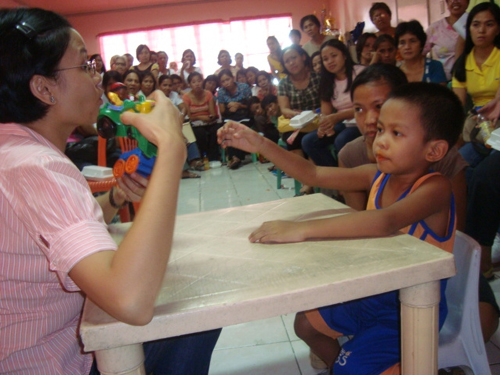
With the help of the Sta. Rosa Chapter and Los Baños Chapter of the Autism Society Philippines, the Los Baños Association of Parents with Disabilities, volunteers and friends, we conducted a free occupational, speech, special education and psychology assessments to special needs individuals from indigent families last 30 November 2013 at the New Los Baños Municipal Hall.

In the spirit of bayanihan, certified professionals worked with volunteer parents. After this activity, trained volunteer parents will act as therapists to implement the recommendations of the professionals not only to their own children; but also on other children within the community.

Contributed by Vicky Erolin, ASP Sta. Rosa Laguna

 
Design by Free WordPress Themes | Bloggerized by Lasantha - Premium Blogger Themes | Sweet Tomatoes Printable Coupons