The Autism Society Philippines (ASP) is a national, non-profit organization dedicated to the well-being of persons on the autism spectrum disorder. We envision a society where Filipinos on the spectrum become the best of their potentials -- self-reliant, independent, productive, socially-accepted citizens of an Autism-OK Philippines.
Showing posts with label law. Show all posts

03 April 2016

The Tax Benefits of employing Persons with Autism in the Philippines

The recently-launched ASP Career Placement Initiative, not only takes the welfare of adults with autism into consideration; but takes on the responsibility of informing employers of the non-tangible and tangible benefits of hiring workers with autism. The BIR Revenue Regulation 8-93, made effective on 29 January 1993, articulates some of the tax benefits of employing persons with autism in the Philippines.

Photo credit: Phistar

Private entities that employ qualified persons with autism and other disabilities as regular employees, apprentices and learners shall be entitled to an additional deduction from their gross income for the taxable year, in an amount equivalent to twenty-five percent (25%) of the total amount paid as salaries and wages to the PWD, over and above the total allowable ordinary and necessary business deductions for said salaries and wages, upon presentation of the following:
  • Proof, as certified by the Department of Labor and Employment (DOLE), that qualified PWDs are under their employ during the taxable year, stating the full name, status, address and taxpayer identification number of each of such employees.
  • A certification from DOLE and the Department of Health (DOH) as to the disability, skills and qualifications of the PWDs employed by such private entity.
  • Evidence of actual payment of salaries and wages to the employed PWD, as well as witholding tax, if any.
The incentives of additional deductions from income shall be availed of by private entities upon filing the final income tax return for the taxable year when the salaries and wages and other expenses for direct costs of the modifications and improvements to physical facilities to accommodate qualified PWDs have been paid or incurred and attaching the following to the said return:
  • Proof as certified by DOLE that disabled persons have actually been employed;
  • Certification from DOLE and DOH, attesting to the disability, skill and qualification of the PWDs employed; and
  • Evidence of actual payment of salaries and wages to the employed PWDs, as well as taxes withheld, if any.
For more information on how you can hire more persons with autism and other disabilities, please contact Atty. V.Cadangen, Law Division Chief, Bureau of Internal Revenue at 02-926-5536, 02-927-2511 local 7328.

16 September 2014

Seminar on Access to Justice for PWAs held in Cebu

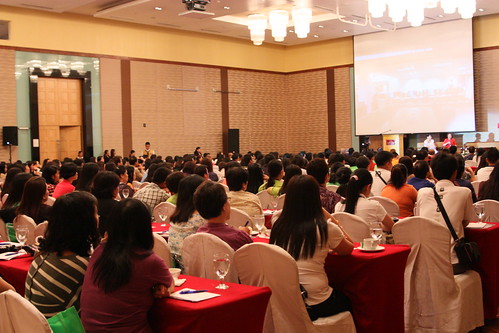
The Department of Justice and the National Council on Disability Affairs conducted a two-day seminar entitled, “Disability Awareness and Sensitivity Workshop on Access to Justice for Persons with Disabilities” on 4-5 September 2014 in Cebu City. The participants included prosecutors, lawyers from the Public Attorneys’ Office in Central Visayas, representatives from the different groups of Persons with disabilities and other government agencies.

Seminar on Access to Justice for PWAs group

The workshop was an orientation on the nature and characteristics of the different types of disabilities and how to assist PWAS, as discussed by experts. The Autism Society Philippines’ very own Chairman Emeritus, Ms. Dang Koe, engaged the participants on the topic, “Assisting persons with learning and cognitive impairment.”

As a mother attending this seminar, it made me realize that recognition of the rights of our special children and assurance for an effective access to justice on equal basis with others is possible for our children.

As an advocate participating in this seminar, we should support the Department of Justice in the conduct of seminars, trainings, orientation for both service providers in the government and private sector especially on the nature, sign and symptoms of Autism and its management. These orientations will be included as a subject in the Mandatory Continuing Legal Education (MCLE).

As an ASP Chapter member and leader attending this workshop, we should involve civil society organizations, Non-Government Organization and Local Government in our ASP Activities such as Autism Week, Angels Walk, Colors of a Spectrum, World Autism Day and seminars to increase Autism Advocacy and ensure provisions of support services.

For participants, it was two days of knowledge enrichment and attitude enhancement on the perceptions towards persons with disability. The main take-away is that “all persons have equal rights before and under the law and are entitled without discrimination to the equal protection and equal benefit of the law”.

About the Contributor: Sandra Espina served as the ASP Cebu Chapter President from 2009 to 2014 and is currently the chapter's adviser. She is the Managing Director of Ivory Properties. Sandra and her spouse Joseph, Rotary District 3860 Governor, are parents to three boys. Zach, their youngest, is on the spectrum.

06 June 2014

EO 417 drives economic independence for all PWDs

Gloria Macapagal Arroyo signed Executive Order 417, directing government agencies to implement wide-reaching economic independence programs for persons with disabilities.

NAPC Logo

The long-anticipated implementing rules and regulations calls for:

(1) the establishment of local Disaster Risk Reduction and Management (DRRM) team composed of four departments -- budget, local government, civil service and national defense. The Implementation Rules and Regulations (IRR) mention about persons with disabilities (section 7.0- 7.3).

(2) The economic independence for persons with disabilities; directing National Anti-Poverty Commission (NAPC) to allocate funds to ensure the implementation of EO 417 and its IRR.

The IRR solidifies inclusive development as part of the national policy agenda.

At least one percent (1%) of all positions in all national government agencies shall be reserved for persons with disabilities (based on RA 10524);

All national government agencies, state universities, government and control corporations and government financial institutions, including LGUs, shall avail of at least ten percent (10%) of their procurements from persons with disabilities;
The accessibility law (BP344) pursuant to section 477 of Republic Act (RA) 7160 (local government code) shall be strictly implemented; and
Government financial institutions shall provide adequate capital and financial support to micro-businesses of persons with disabilities.

Please download the IRR of EO 417 here.

For ASP and other autism advocates, the need to develop the capabilities of adults with autism now becomes a priority. The law protects PWAs and does not cover family members who serve as primary caregivers.

10 November 2013

ASP lobbies for inclusive health benefits

The Autism Society Philippines is one with many disability groups in the inclusion of our unique medical and therapeutic needs under the benefits of the country’s universal healthcare program, Philhealth and of the private health maintenance organization (HMO) insurance.

In a position paper submitted to the Senate in September 2013, the ASP saw the need to engineer more laws and policies towards inclusive development. Among them was the availability of creative mechanisms for funding our medical and therapy costs. The parents of the individuals on the spectrum would welcome reforms that will help them fund the interventions for their children. One hundred percent tax-deductibility of intervention expenses of parents for their children with disabilities, Philhealth-supported therapy, interventions included in HMO coverage are only some of the creative solutions our sector would like our leaders to champion.

The Occupational Therapy Association of the Philippines, Inc. (OTAPI) -- a valued ASP partner in this cause -- has proactively appealed for occupational therapy services to be accredited for Philhealth coverage. OTAPI is currently working on proposed changes to the implementing rules and regulations to the Republic Act 9241 otherwise known as the Philhealth Act.

ASP Vice President Cecilia Sicam and Program Coordinator Raph Torralba, Mrs. Nelia De Jesus of NCDA, Christopher Molin of PDAO-Naga City and Mr. Jose Dela Cruz of Philippine School for the Deaf at the ceremonial launching of the Z-Morph Prosthesis Benefit Package introduced by Philhealth on 31 October 2013.

As ASP National works with the government agencies and private organizations, we enjoin ASP chapter leaders and members to be part of the process of change. You can do something today.

As honest taxpayers, we need universal access to free medical and therapy for our family members with autism. Please write a letter or submit a community petition to your representatives in Congress to inspire them to ACT.

25 September 2012

House Approves Bill Establishing Special Education (SPED) Centers Nationwide

The House of Representatives has approved on third reading a bill establishing special education (SPED) centers for children with special needs (CSNs) all over the country.

House Bill 6547, to be known as the Special Education (SPED) Act of 2012, seeks to institutionalize an adequate and relevant educational program for every CSN through the establishment of SPED Centers and provide vital support mechanisms.

Rep. Susan Yap
Rep. Susan Yap (2nd District, Tarlac), principal author of the bill, said the SPED Centers shall function as the resource center for the implementation of inclusive education that will accept all kinds of children on regular schools.

"The establishment of a SPED center in each school division and at least three SPED centers in big school divisions will ensure nationwide access of the CSNs to basic education through the formal system and other alternative delivery services in education and later facilitate integration with mainstream education," Yap said.

Yap said the Center shall assist, facilitate, and monitor the transfer and admission of qualified children with disabilities to post-secondary or tertiary education institutions.

"These SPED Centers in regular schools shall ensure that CSN fully develop their abilities, talents, interests and all aspects of their development to become more responsible for their lives and more effective partners in all the affairs of the state," Yap said.

The bill defines children with special needs as those who are gifted or are fast learners and those who are disabled, impaired or handicapped and in need of special education as well as services for rehabilitation.

Under the measure, each SPED center shall have specialized teachers who can handle children and youth with special needs including but not limited to those with visual or hearing impairment, autism, learning disabilities, behavioral problems, multiple disabilities, mental retardation/handicap and mental giftedness.

An assistant principal for each SPED center shall administer and supervise the alternative educational programs, early intervention programs, monitoring, supervision, and provision of technical assistance, training and enhancement programs to SPED personnel, referral and placement procedures, and oversee the other components of the special education.

Other members of administrative core and placement committee of the SPED unit are an educational psychologist or psychometrician, physical therapist, occupational therapist, speech and language therapist/speech correction teacher, and one education supervisor.

The measure shall enhance the right of teachers and support personnel to professional advancement through adequate remuneration, scholarship and training grants and other incentives.

The Act also mandates full continuum of educational services by the Department of Education (DepEd) to those CSN below school age through regular home visits, consultations, day care activities and any other proper medium or program.

The measure also provides financial assistance to the economically marginalized but deserving CSN at the elementary and secondary levels; ensures adequate and free medical assistance and intervention programs for CSN; and grants incentives to private institutions catering to the needs of CSN.

The local government units shall be responsible for the provision of CSN-friendly sites and counterpart funds for training and seminars of parents and teachers in their respective localities.

The co-authors of the bill are Reps. Juan Edgardo Angara (Lone District, Aurora), Augusto Syjuco (2nd District, Iloilo), Pedro Acharon, Jr. (1st District, South Cotabato and General Santos City), Bernadette Herrera-Dy (Party List, Bagong Henerasyon), Eulogio Magsaysay (Party List, AVE), Danilo Ramon Fernandez (1st District, Laguna), Winston Castelo (2nd District, Quezon City), Rufus Rodriguez (2nd District, Cagayan de Oro City), Maximo Rodriguez, Jr. (Party List, Abante Mindanao), Joseph Victor Ejercito (Lone District, San Juan City), Emi Calixto-Rubiano (Lone District, Pasay City), Raymond Palatino (Party List, Kabataan), Rodolfo Biazon (Lone District, Muntinlupa City), Ma. Georgina De Venecia (4th District, Pangasinan), Linabelle Ruth Villarica (4th District, Bulacan), Diosdado Macapagal Arroyo (2nd District, Camarines Sur), Gloria Macapagal-Arroyo (2nd District, Pampanga), Tomas Apacible (1st District, Batangas), Ma. Carmen Zamora-Apsay (1st District, Compostela Valley), Cesar Sarmiento (Lone District, Catanduanes), Josephine Veronique Lacson-Noel (Lone District, Malabon City), Christopher Co (Party List, Ako Bicol), Rodel Batocabe (Party List, Ako Bicol), Alfredo Garbin, Jr. (Party List, Ako Bicol), Daryl Grace Abayon (Party List, PL, Aangat Tayo), Lani Mercado-Revilla (2nd District, Cavite), Alejandro Miraflores (Lone District, Aklan), Rachel Marguerite Del Mar (1st District, Cebu City), Cinchona Cruz-Gonzales (Party List, CIBAC), Czarina Umali (3rd District, Nueva Ecija), Aurora Enerio-Cerilles (2nd District, Magtanggol Gunigundo (2nd District, Valenzuela City), Emmeline Aglipay (Party List, DIWA), Abigail Ferriol (Party List, KALINGA), Nancy Catamco (2nd District, North Cotabato), Angelo Palmones (Party List, AGHAM), Luzviminda Ilagan (Party List, Gabriela), Mary Mitzi Cajayon (2nd District, Caloocan City), Emmi De Jesus (Party List, Gabriela), Antonio Tinio (Party List, ACT Teachers), Ma. Isabelle Climaco (1st District, Zamboanga City), Rafael Mariano (Party List, ANAKPAWIS), Marlyn Primicias-Agabas (6th District, Pangasinan), Eufranio Eriguel (2nd District, La Union), Mark Villar (Lone District, Las PiƱas), Carol Jayne Lopez (Party List, YACAP) , Salvador Cabaluna III (Party List, I Care), Erico Aumentado (2nd District, Bohol), Thelma Almario (2nd District, Davao Oriental), Pedro Romualdo (Lone District, Camiguin), and Marcelino Teodoro (1st District, Marikina City).

For comments and suggestions, call Tel (632) 931-5001 local 7444.

By Jazmin S. Camero, Media Relations Service-PRIB, from the House of Representatives of the Philippines Website

 
Design by Free WordPress Themes | Bloggerized by Lasantha - Premium Blogger Themes | Sweet Tomatoes Printable Coupons